
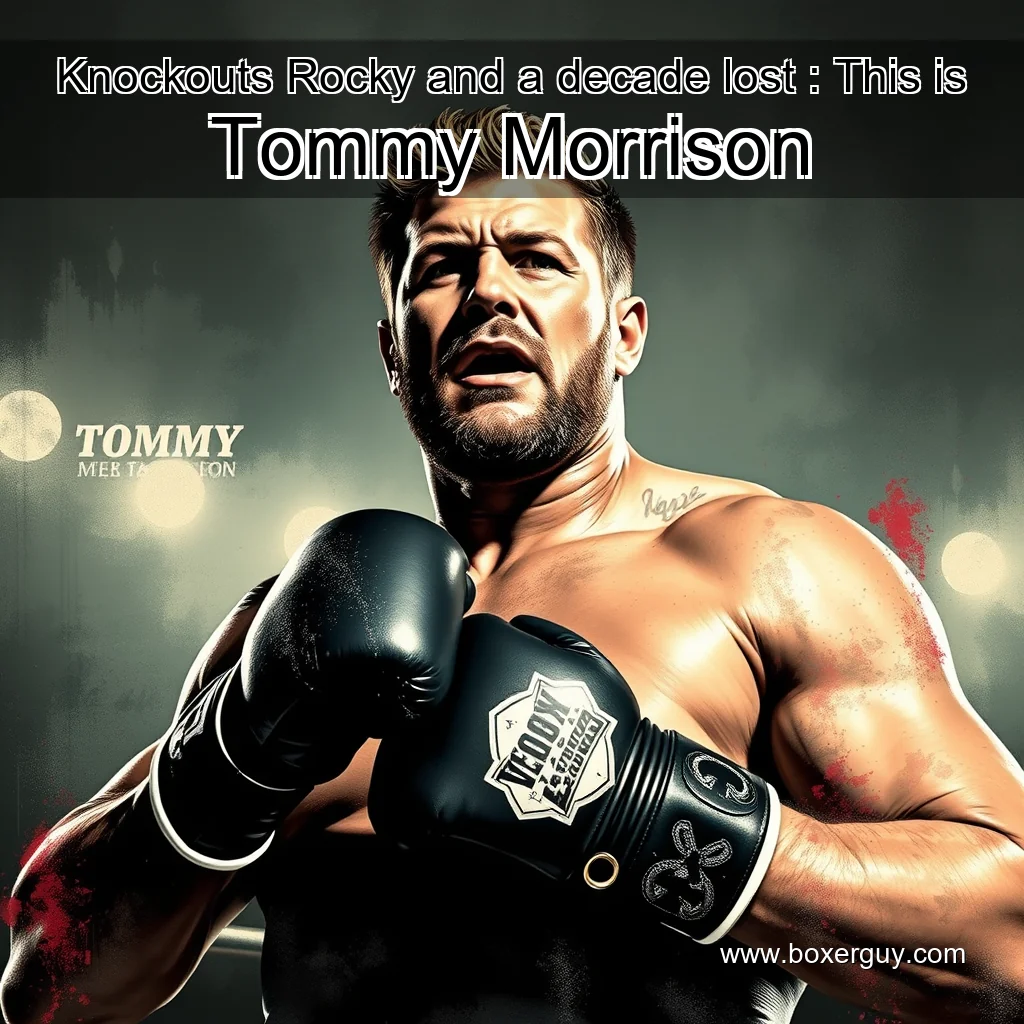
His impressive amateur record earned him a spot in the 1988 US Olympic Trials, where he ultimately finished fourth.
Early Life and Amateur Career
Tommy Morrison’s early life was marked by a strong passion for boxing. Growing up in Gravette, Arkansas, he was introduced to the sport at a young age by his father, who was a boxer himself. Morrison’s natural talent and dedication quickly made him a standout in the local boxing scene.
He was looking for a new actor to play the role of Rocky Balboa.
The Unlikely Casting Choice
Tommy Morrison was the name that caught Stallone’s attention.
Overnight, he became a household name, and his face was plastered on billboards and magazine covers. The sudden rise to fame was a whirlwind experience for Morrison, who had never imagined that his life would change so drastically.
The Rise to Fame
Morrison’s breakthrough role in ‘Rocky V’ catapulted him to stardom, and he became an overnight sensation. The film’s success was largely due to Morrison’s portrayal of Tommy Gunn, a young boxer who becomes the protégé of Rocky Balboa. Morrison’s performance earned him widespread recognition, and he was hailed as a rising star in Hollywood. Key aspects of Morrison’s performance in ‘Rocky V’: + His portrayal of Tommy Gunn was praised for its nuance and depth.
Morrison then took a break to tend to his injured hand. After the break, Morrison continued to dominate Thomas, landing several hard shots.
Morrison’s relentless pursuit of victory drives him to overcome adversity and emerge victorious in the end.
Hipp was a formidable opponent, but Tommy was determined to prove his skills and win the fight. In the end, Tommy emerged victorious, showcasing his resilience and determination.
The Road to Redemption
After his loss to Joe Hipp, Tommy Morrison continued to face tough opponents, but he refused to give up. He trained harder than ever before, determined to regain his title and prove his doubters wrong. Morrison’s next few fights were a series of impressive victories, which solidified his position as a top contender in the heavyweight division. Morrison’s training regimen was grueling, with a focus on building his strength and endurance. He worked with renowned trainers and coaches to fine-tune his technique and strategy.
However, Bentt showed remarkable resilience and determination, refusing to back down. He managed to survive the round and even landed a few good shots on Morrison.
The Rise of a New Challenger
The underdog story of Michael Bentt is one that will be remembered for years to come. At just 21 years old, Bentt was taking on one of the toughest opponents in the world, Mike Morrison.
However, Weathers was injured and Morrison was forced to withdraw from the 1996 Summer Olympics boxing team due to a shoulder injury. Morrison was subsequently diagnosed with a torn labrum in his left shoulder.
Morrison’s Career After the Shoulder Injury
After the shoulder injury, Morrison’s career was put on hold. He underwent surgery to repair the torn labrum and was forced to take a break from boxing. During this time, Morrison focused on his education and personal life. He attended the University of California, Los Angeles (UCLA) and studied business administration.
Morrison’s Return to Boxing
Morrison returned to boxing in 1997, after a two-year hiatus. He began training with a new coach and worked on rebuilding his strength and endurance. Morrison’s first fight back was against a relatively unknown opponent, but he was determined to prove himself. He won the fight convincingly, and his confidence grew with each subsequent victory.
Morrison’s Rise to Prominence
Morrison’s winning streak continued, and he began to attract attention from boxing fans and promoters. He was offered a contract with a major boxing promotion, and his career started to gain momentum. Morrison’s skills and determination earned him a spot on the boxing world’s radar.
Morrison’s Loss to Lennox Lewis
Despite his success, Morrison’s career was not without setbacks.
Morrison claimed that he had been taking antiretroviral therapy (ART) since 1997, which he believed helped him to suppress the virus.
The Diagnosis and Early Years
In 1996, Tommy Morrison, the former heavyweight champion of the world, was diagnosed with HIV. The news was a shock to his fans and the boxing community, as Morrison was known for his charismatic personality and his ability to perform under pressure. At the time, Morrison was 25 years old and had just won the heavyweight title from Mike Tyson in 1996. The diagnosis was a significant setback for Morrison, but he was determined to fight the disease and live a normal life.
The Road to Recovery
Morrison’s road to recovery was not easy. He had to undergo a series of tests and treatments to manage his condition. He was prescribed antiretroviral therapy (ART), which is a combination of medications that help to suppress the virus. Morrison also had to make significant lifestyle changes, including quitting smoking and reducing his alcohol consumption. He also had to deal with the emotional toll of his diagnosis, including feelings of depression and anxiety. Morrison’s treatment plan included: + Antiretroviral therapy (ART) + Lifestyle changes (quitting smoking, reducing alcohol consumption) + Counseling and therapy to deal with emotional toll
The Announcement and Its Aftermath
In 2006, Morrison announced that he had taken several HIV tests since his diagnosis in 1996, and they had all come back negative.
He was 41 years old at the time. He was scheduled to fight in the first round against a 25-year-old opponent. Tommy was confident that he had beaten the virus and was ready to return to the ring.
The Road to Recovery
Tommy’s journey to recovery was not an easy one. He had been living with HIV for over 20 years, and the disease had taken a toll on his body. He had experienced a range of symptoms, including fatigue, weight loss, and memory problems. Despite his best efforts, Tommy had struggled to manage his condition, and he had often felt like giving up.
The Turning Point
But then, something changed.
He has been suspended for 6 months for violating the USADA anti-doping rules.
The Controversy Surrounding Tommy’s Career
Tommy has been embroiled in several controversies throughout his career, including allegations of doping and a history of suspensions. In 2010, Tommy was suspended for 6 months after testing positive for the banned substance testosterone. In 2012, he was suspended again for 6 months after violating the USADA anti-doping rules. In 2015, Tommy was suspended for 6 months after testing positive for the banned substance human growth hormone.
The Impact of Controversies on Tommy’s Career
The controversies surrounding Tommy’s career have had a significant impact on his career, including:
The Future of Tommy’s Career
Despite the controversies surrounding his career, Tommy is still a talented fighter with a lot to offer.


